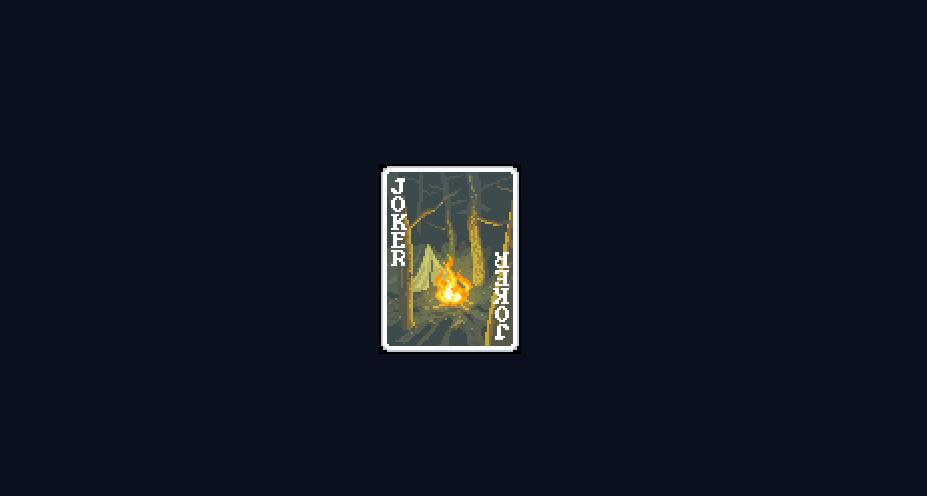
Balatro is consuming my life.
That’s to be expected, really. As the hot new roguelite on the block, it seems to be consuming everyone’s life right now. As it should. It’s a good game.
That’s not what I’m here to write about, though. What I’m here for is Dark Souls. Or, at the very least, how to wring as much Dark Souls as you can out of a single card.
Let’s begin.
Part 1: A Story About a Campfire
Back in the year of 2022, a little game called ELDEN RING hit the market.

Source
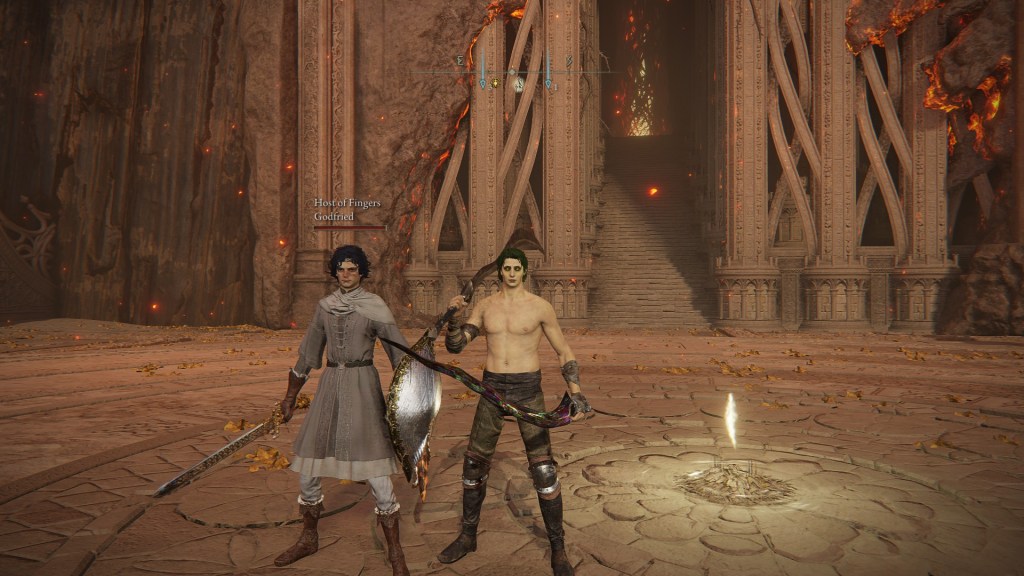
I hadn’t really played any FromSoftware games prior to this, despite spending a lot of time with adjacent genres. But, in 2022, ELDEN RING was looking really good, and one of my best friends was also interested – so we dove in. We did a full co-op playthrough, and it was an incredible experience, start-to-finish.
It also awoke something primal in my friend Sam’s brain – and she has been an unrelenting Dark Souls girl ever since. My circle of friends is now a solid 30% more like a temple to the works of FromSoftware than it used to be – and I’m here for it.
Anyways, a few weeks ago was February 2024’s Steam Next Fest – an event dedicated to demos of upcoming video games – Balatro included.
I had seen Balatro kicking around my YouTube recommendations for a few months, but hadn’t really looked into what it was about at all. So, on a whim, I downloaded it and gave it a try. Surprise, surprise: it was good.
Then, fresh off of watching my my friends’ simultaneous playthroughs of ELDEN RING and Dark Souls II, I draw this:
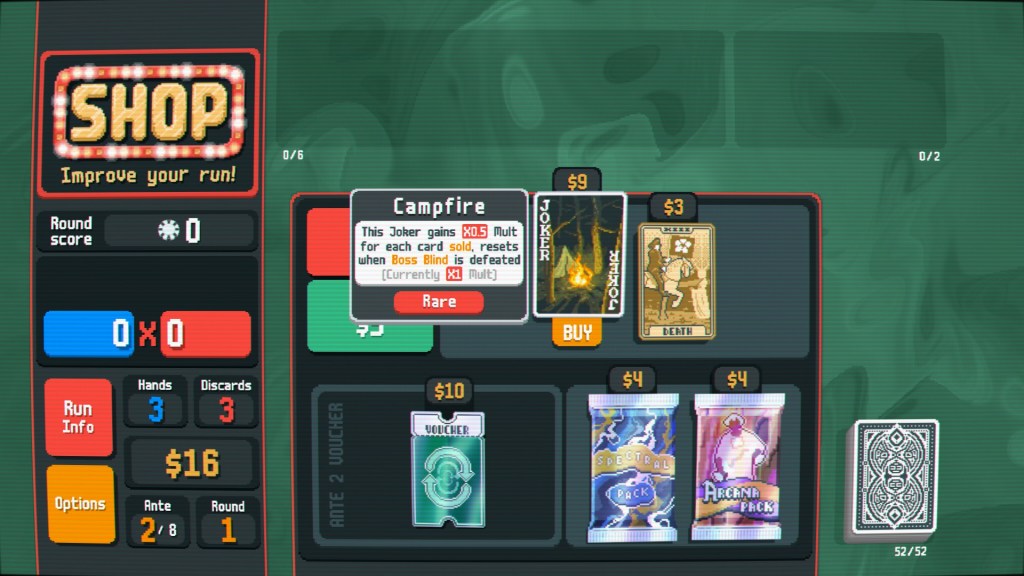
Naturally, in my apparent fugue state, there’s only one thought that pops into my head:
“Wait…is this Dark Souls?”
Part 2: The Quickest of Explainers
As I’m writing this, I’m realizing that what I’m about to talk about requires a fair bit of prior knowledge on the part of the reader. Namely, what Dark Souls and Balatro are, and how they work. I don’t want to get too bogged down in this, so I’m going to try and keep it quick. If you’re already familiar with both of these, feel free to skip ahead to the last paragraph of this part.
Ready? Okay.
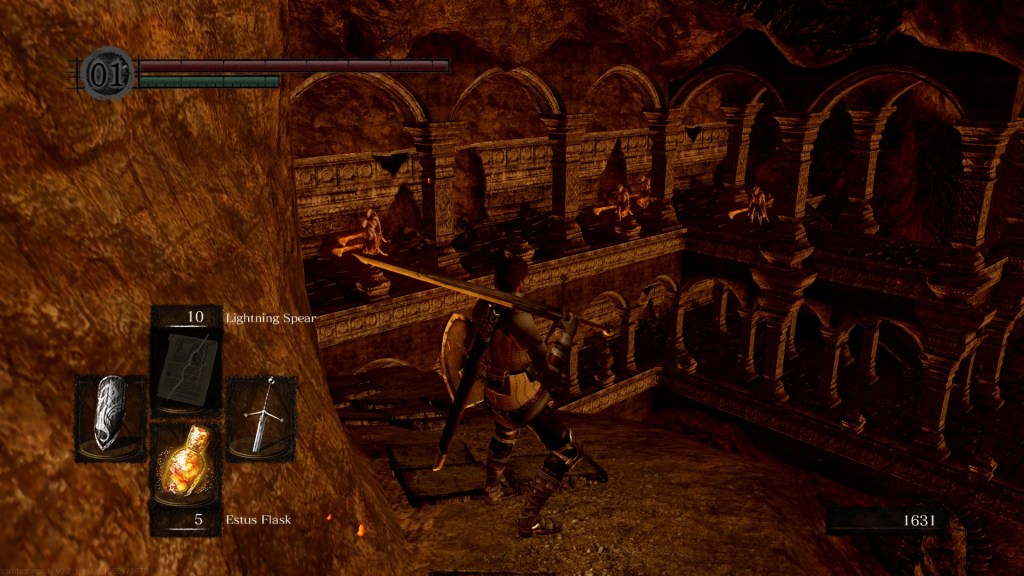
Dark Souls is a series of dark fantasy, action role-playing games by FromSoftware, with a reputation for difficulty. They tend to focus on cyclical pattern of gameplay, with mechanics that punish blindly running into encounters – but reward and encourage learning from mistakes. An archetypal playthrough sees players entering an area or encounter, getting thoroughly trounced, and learning from that, repeatedly, until they are strong/skilled enough to overcome their predicament. And then, they do it all over again for the next challenge, ad infinitum.
To say that this format has been successful would be an understatement, spawning the ever-popular souls-like genre – which includes a number of games similar to/inspired by Dark Souls – including many follow ups from FromSoft itself. Bloodborne, Sekiro, ELDEN RING, etc.
(Technically Demon’s Souls came first, but for the purpose of this essay I’m omitting that.)
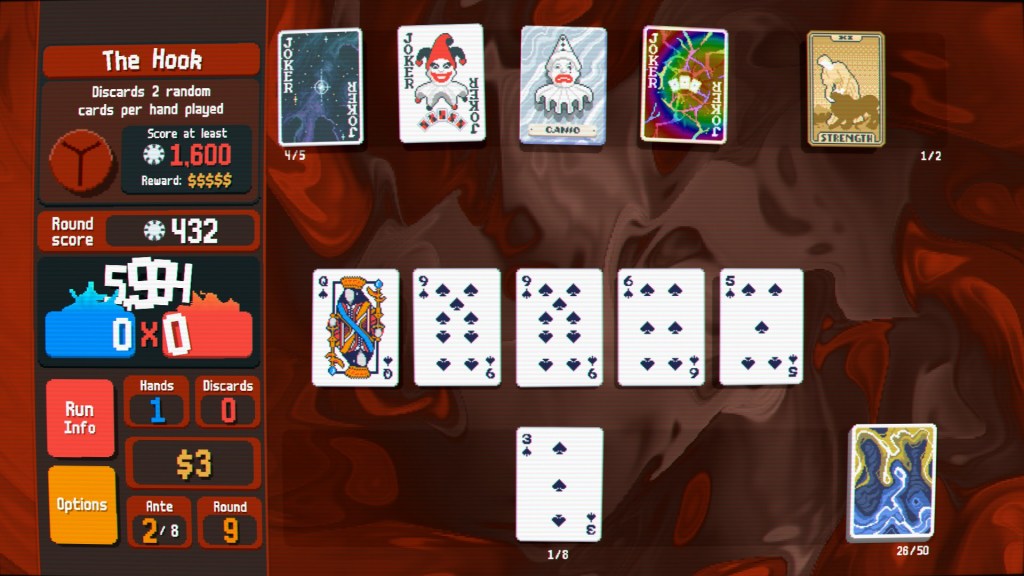
Balatro, our other focus today, is a roguelite, poker-based card game, released by solo developer LocalThunk in February 2024. The roguelite and roguelike genres have a longer, far more complex history than I have time to get into here – so I won’t. Suffice to say, a “roguelite”, for our purposes, is a game that operates on a run-by-run basis. You play until you lose, unlock more things from having played, and start again from the beginning. Rules may vary.
In Balatro’s case, this takes the form of a series of back-to-back rounds, where players play “traditional” poker hands to earn points. Each round requires a certain number of points to progress, and players can purchase upgrades, items, and ability-providing joker cards between rounds, to assist them in meeting their target.
It’s quite funny – and, in the time it took me to write this, people have cracked the game wide open, with hands whose scores roll over into infinity. Neat.
(If you knew everything about Dark Souls and Balatro, this is where you should start reading again.)
Holding up the roguelite and souls-like genres next to each other, it’s not hard to see a degree of similarity between them.
That’s just a degree, mind you. Not everything is Dark Souls.
But nevertheless, there is something there – particularly with the cycles inherent to their gameplay patterns. Try. Die. Repeat.
…Which brings us back to the focus of this story.
Part 3: A Love Letter to a Flame
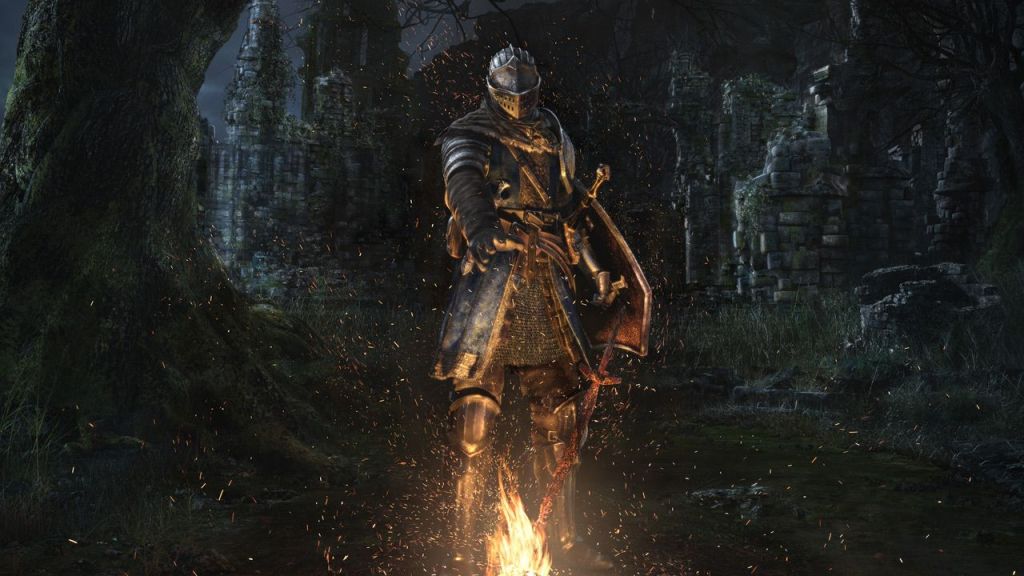
Mechanically and culturally, the bonfire is a symbol of progress iconic to the Dark Souls franchise. They are the demarcation lines that define the series’ cyclical gameplay – a new starting place, where the player can rest safely in the knowledge that their future failures will never again set them back any further than this point.
And so, for someone as inundated with Dark Souls fans as myself, the appearance of a similar symbol in this roguelite game was immediately suspicious – in the “is this a Dark Souls reference?” sense, of course.
Upon further inspection, the actual effects of this card reveal that… yeah, probably.
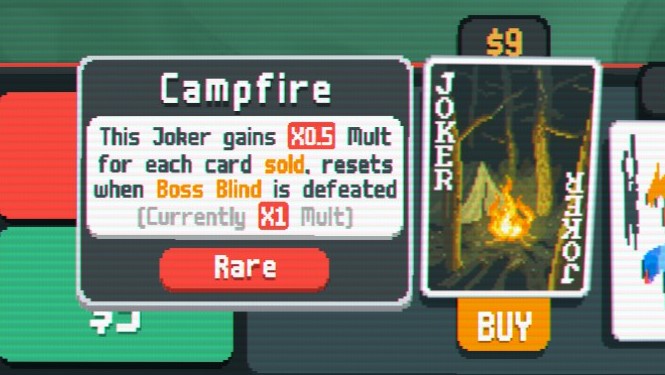
Over the course of each ante, every sacrifice you make causes the Campfire to grow stronger and stronger – until you defeat a boss. Then, it resets – and you get to start the process all over again.
That sounds familiar.
Now, to be clear: I’m kidding. I don’t actually know if this is a reference to Dark Souls. I wasn’t following Balatro’s development until right before it came out, and I honestly haven’t even bothered trying to find out what LocalThunk intended. I wouldn’t be surprised, given some of the other references found in the game’s joker cards, but this could easily be a reference to any number of things. Like a real-life campfire, for example.
Honestly, though? I don’t really care about that, as far as this essay goes. What I do care about is what the card does, and how it bends the game experience around it.
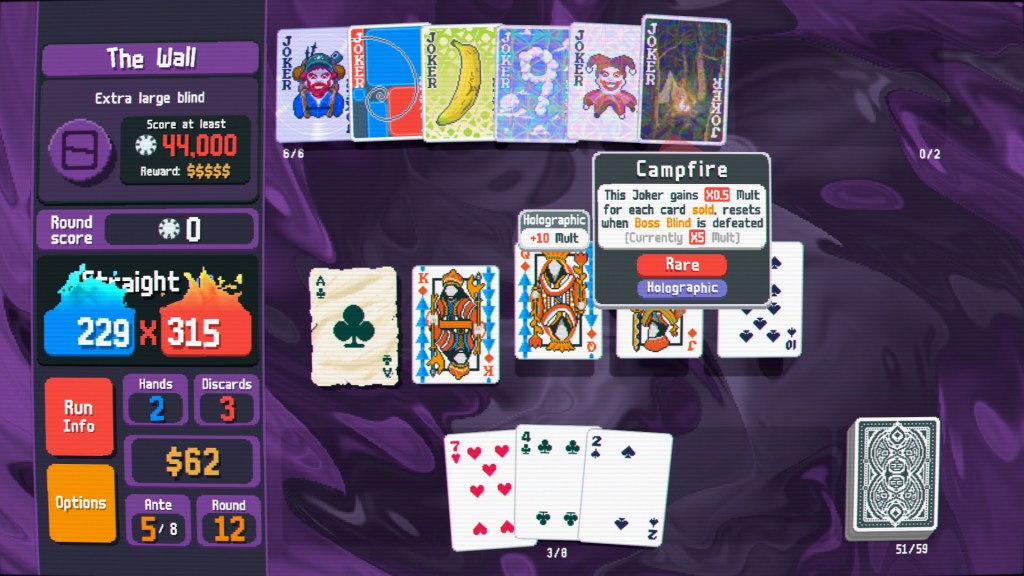
Regardless of intent, the Campfire card creates a pattern of play that is evocative of another game’s experience – while sticking firmly to the confines of Balatro‘s existing mechanics. That is by no means a new concept in game design; using mechanics to evoke feelings is arguably the main purpose of the entire field. It is, however, an evergreen trick that I find to be cool as hell.
There’s a lot of different ways to achieve this sort of thing, with varying degrees of complexity. One of my personal favorites comes from League of Legends, where – in order to create the experience of a careful, deliberate sniper, they created a character whose abilities essentially override the game’s attack speed mechanics. Attack speed, crit-rate, and all the other rapid-fire-related things get folded into a single stat: higher damage on Jhin’s slower, more murderous bullets.
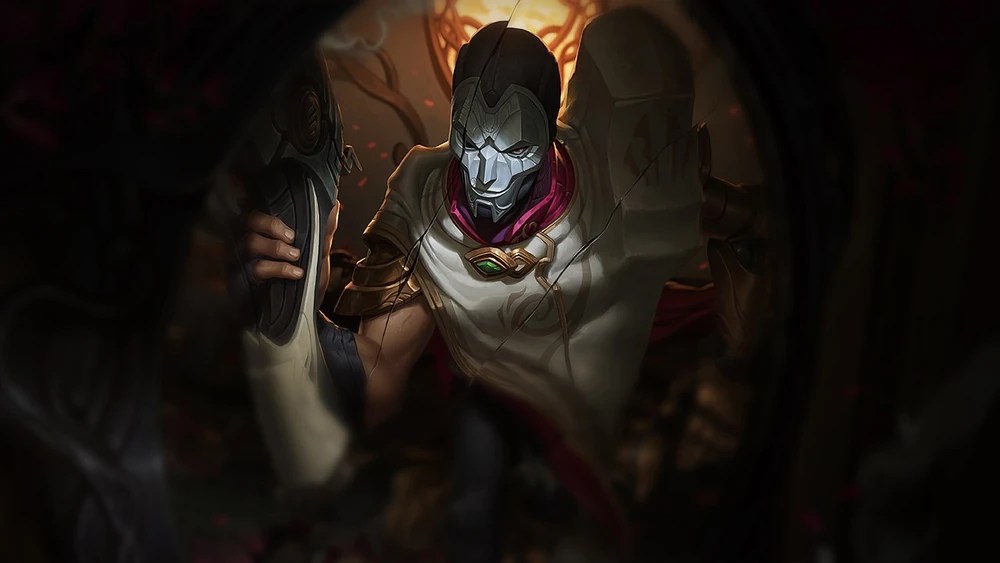
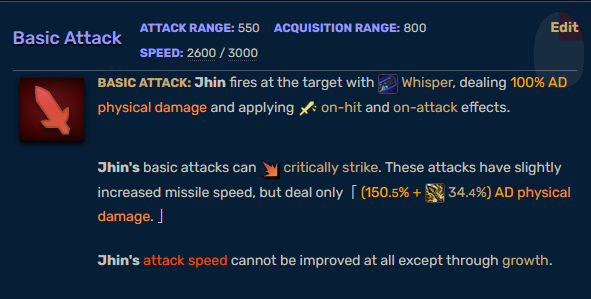
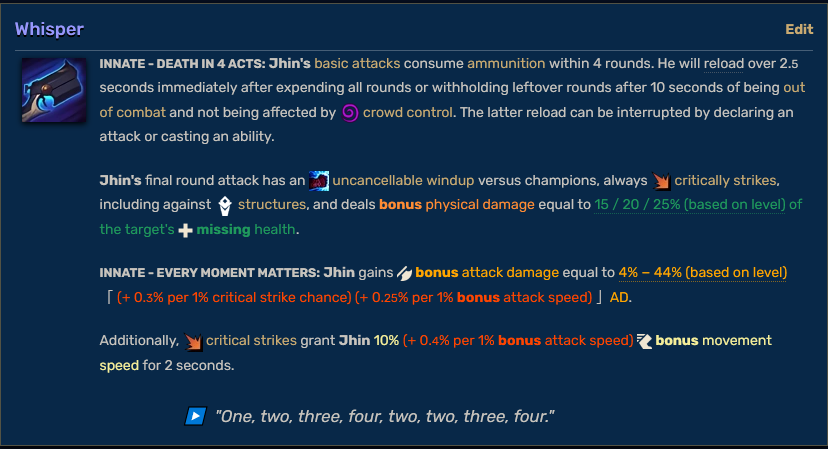
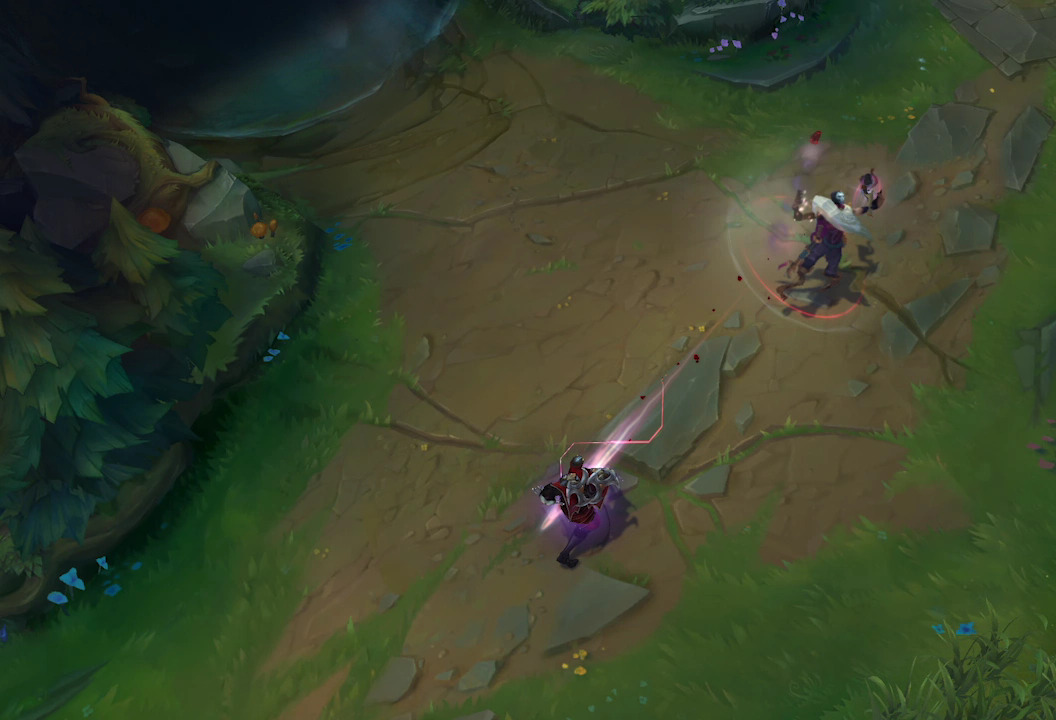
On paper, the rule-bending required to create this seems almost comical. However, the end result for the player ends up relatively straightforward, because they don’t have to do the math. All they need to know in the moment is that their shots are limited – but each hit they land will be huge. It produces a character that feels fundamentally different from others of its archetype, but not too unfamiliar to be picked up and played.
These sorts of design tricks can also be done in games far smaller in scope than League or even Balatro, by making economical use of the resources available. There’s a roguelite mobile game I’ve been playing for the past year called Tower of Winter, which does this frequently to create variety from a small-ish pool of mechanics.


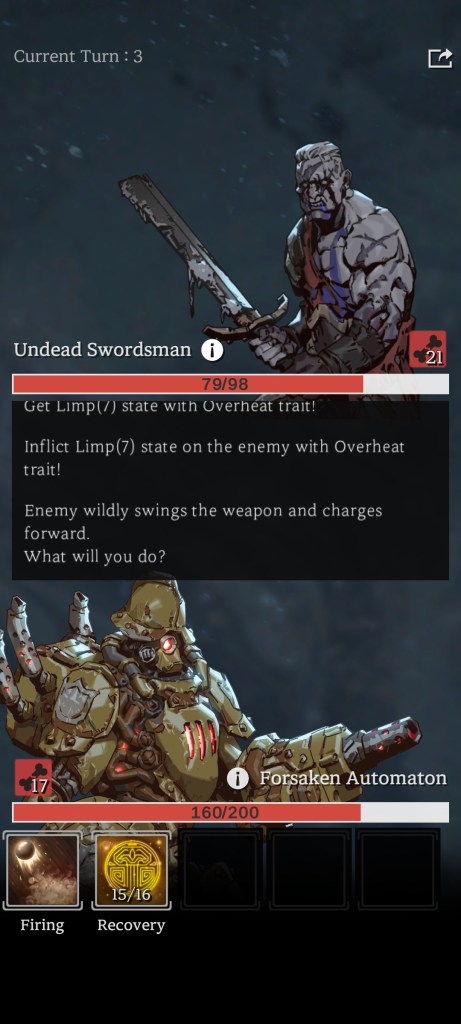
Tower of Winter had (to my knowledge) only a single, semi-randomized campaign for much of it’s history, in which you could easily encounter a solid 70% of the mechanics the game has to offer. However, the developers do some fun sleight-of-hand to keep things fresh, reshuffling and re-contextualizing content between the playable characters.
A reptilian fire-priest, recently awakened from hibernation, has their standard attack replaced with the ability to conflagrate opponents – dealing damage over time, instead of instantly. Fittingly, this turns each combat into a waiting game – a matter of outliving your enemies, and praying for the flames to take them.
A malfunctioning automaton, meanwhile, receives an “overheating” ability, which applies the game’s (typically rather rare) “Limp” debuff to both player and enemy every turn. An effect that once represented bodily injury is re-contextualized into a ticking clock – a race against time, as the player’s mechanical body destroys the very environment around them.
None of the changes made here are particularly substantial. In most cases, the mechanics involved aren’t even renamed or reskinned. They do, however, change how it feels to play – and fantasies inherent to the characters themselves.

Balatro‘s campfire, in my opinion, is a emblematic of a kind of Goldilocks zone between these two examples – a distinct, unique, playthrough-warping element that nevertheless stays well within it’s game’s existing conventions. The buying, selling, and discarding of resources is already a natural part of Balatro‘s deck-building progression, but the campfire takes that and elevates it. It imposes a cyclicality upon Balatro‘s usual gameplay pattern – pointing forward at each stage’s boss, and stating:
“That is what you are working towards. Whatever comes next comes next – but for now, this is the hurdle you have to overcome, whatever it takes.”
Part 4: The Flavor
The campfire is not the only joker in Balatro to do something like this. Hell, it’s probably not even the most run-warping joker. It’s just the one that caught my eye, due to it’s superficial resemblance to something from another game. Really, it’s just an excuse to talk about one of my favorite aspects of game design – the flavor.

In a field all about communicating to players, the abstraction of things and concepts into mechanics that are evocative of their source is… cool. That’s hardly a new take on game design, I know – but it’s one I think is true and worth repeating. It’s an infinitely fascinating part of games, as a medium – on both the creation and consumption sides.
Like I said, I didn’t bother to check if the campfire was supposed to be an explicit nod to Dark Souls before writing this, because that’s besides the point. The fact that the design of the card made me wonder about it – that it made me think about how mechanics can affect the imagination of the player – is a testament to one of the great strengths of games, in-and-of itself.
…And also that Balatro is a really good card game.
Thanks for reading, and have a good one.

 The Chep Site

Leave a reply to My Life as an Upjumped Cursor – The Chep Site Cancel reply